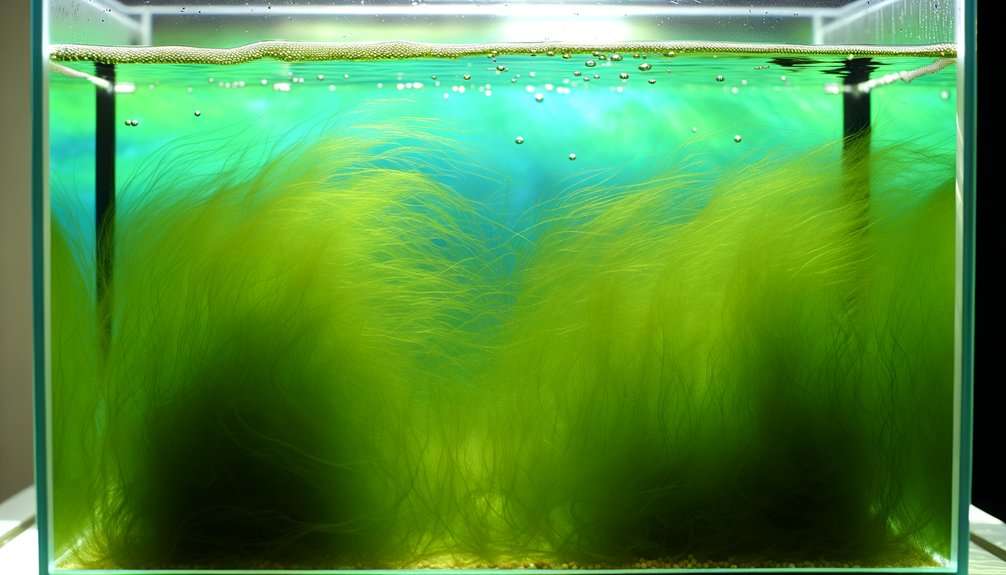
Green algae in fish tank the key to a naturally stable aquatic ecosystem. These organisms are vital for healthy aquarium life, acting as a powerhouse filter that absorbs excess nutrients like nitrates and phosphates while producing necessary oxygen. They even provide a valuable natural food source that aids in your fish’s digestion and overall health. When factors like overfeeding or excessive light exposure cause runaway growth, however, you must step in. Maintain balance by utilizing algae-eating fish, optimizing your lighting schedule, and performing routine water changes. Learn how to harness these beneficial organisms to create a thriving, balanced, and low-maintenance tank.
Green Algae In Fish Tank Key Takeaways
- Green algae can enhance water quality by absorbing excess nutrients and carbon dioxide in fish tanks.
- They provide a natural food source for herbivorous fish, promoting their health and growth.
- Excessive algae growth may indicate high nitrates and phosphates, often from overfeeding or decaying matter.
- Manage algae by limiting light exposure to 8-10 hours daily and changing 10-15% of the water weekly.
- Introducing algae-eating fish like Siamese algae eaters can help control green algae populations effectively.
Understanding Green Algae: Types and Characteristics
While you might think of green algae as just a nuisance in your fish tank, understanding their types and characteristics reveals their complex role in aquatic ecosystems. Green algae, primarily belonging to the Chlorophyta division, display diverse forms, from filamentous species like Spirogyra to unicellular forms such as Chlorella. To accurately identify these algae, you can employ various identification methods, including microscopic examination and observation of their growth patterns. Factors like light exposure, nutrient availability, and water temperature influence their proliferation. Understanding these characteristics not only helps you manage your aquarium effectively but also enhances your capacity to support a balanced ecosystem. By recognizing the specific types of green algae, you can better serve the habitat’s health and your aquatic life.
The Role of Green Algae in Aquarium Ecosystems
Green algae play an essential role in maintaining the balance of aquarium ecosystems, as they contribute to both the biological and chemical processes crucial for aquatic life. Their presence fosters a healthy environment through:
- Oxygen Production: During photosynthesis, green algae release oxygen, vital for fish and other organisms.
- Nutrient Cycling: They absorb excess nutrients like nitrates and phosphates, preventing algae blooms and promoting algae diversity.
- Symbiotic Relationships: Green algae often engage in algae symbiosis with other aquatic organisms, providing shelter and nourishment while benefiting from their waste.
Benefits of Green Algae for Fish and Other Inhabitants
Although some aquarists may overlook them, the benefits of green algae for fish and other inhabitants in a tank are substantial. Green algae provide a natural food source, rich in essential nutrients, which enhances fish health and promotes growth. Herbivorous fish thrive on these algae, improving their digestion and overall vitality. Additionally, algae contribute to water quality by absorbing excess nutrients and carbon dioxide, thereby maintaining a balanced ecosystem. They also offer shelter and breeding grounds for smaller aquatic creatures, fostering biodiversity within the tank. By incorporating green algae, you create a more self-sustaining environment that supports the well-being of all inhabitants. Ultimately, these algae benefits lead to a healthier, more vibrant aquarium.
Common Causes of Excessive Green Algae Growth
Excessive green algae growth in your aquarium can stem from several interrelated factors that disrupt the delicate balance of the ecosystem. An algae bloom often occurs due to:
- Excessive Nutrients: High levels of nitrates and phosphates from overfeeding or decaying organic matter can fuel algae growth.
- Light Exposure: Prolonged exposure to intense lighting encourages algae proliferation. Make sure your aquarium lighting is appropriate and not on for too long.
- Poor Water Circulation: Stagnant water can lead to localized nutrient accumulation, providing an ideal environment for algae to thrive.
Addressing these factors is essential in maintaining a healthy ecosystem for your aquatic inhabitants and preventing excessive green algae growth.
Effective Strategies for Managing Green Algae
To effectively manage green algae in your aquarium, you need a multi-faceted approach that targets the root causes of growth. Start with regular tank maintenance, guaranteeing ideal lighting and nutrient levels. Incorporating algae-eating fish or invertebrates can greatly reduce algae proliferation. Monitor water parameters and perform routine water changes to maintain a balanced environment.
Here’s a quick reference table for effective strategies:
| Strategy | Description | Benefits |
|———————-|————————————-|—————————-|
| Algae-Eating Fish | Introduce species like Siamese algae eaters | Reduces algae naturally |
| Regular Water Changes | Change 10-15% of water weekly | Dilutes nutrients |
| Control Lighting | Limit light to 8-10 hours daily | Minimizes growth |
| Maintain Filtration | Guarantee adequate filtration | Removes organic waste |
| Monitor Nutrients | Test and adjust nutrient levels | Prevents excess nutrients |
Green Algae in Fish Tank Naturally Controlled
While many aquarists resort to chemical treatments for managing green algae, there are several natural methods that can effectively control its growth without disrupting the tank’s ecosystem. Implementing these natural remedies not only promotes a healthier environment but also supports the balance of your aquatic life.
Natural methods for controlling green algae enhance your tank’s ecosystem while promoting a balanced aquatic environment.
- Introduce algae eating fish****: Species like Siamese algae eaters and otocinclus can considerably reduce algae levels by consuming it directly.
- Optimize lighting: Adjusting your light duration to 8-10 hours daily prevents excessive algae growth, as it thrives in bright conditions.
- Regular water changes: Performing weekly water changes helps remove nutrients that fuel algae, keeping levels in check.
Chemical Treatments for Algae Control: Pros and Cons
When faced with persistent green algae blooms, many aquarists consider chemical treatments as a quick solution to restore balance in their tanks. Chemical options, such as algaecides and algae inhibitors, can effectively reduce algae growth. However, they come with pros and cons. On the positive side, these treatments can provide immediate relief, allowing for clearer water and improved aesthetics. Conversely, they might harm beneficial bacteria or stress fish if not used carefully. Additionally, chemical solutions may only offer a temporary fix if underlying issues aren’t addressed. It is crucial to weigh these factors and consider implementing complementary methods alongside chemical treatments, ensuring a holistic approach to algae management while prioritizing the health of your aquatic ecosystem.
Maintaining a Balanced Aquarium to Prevent Algae Overgrowth
Maintaining a balanced aquarium is essential for preventing algae overgrowth, as an imbalanced ecosystem can lead to nutrient spikes that favor algae proliferation. To achieve this balance, focus on the following:
- Tank Filtration: Make certain your filtration system efficiently removes excess nutrients while providing adequate oxygenation. A well-maintained filter is critical for a stable environment.
- Water Parameters: Regularly test for ammonia, nitrate, and phosphate levels. Keeping these in check prevents algae from thriving. Ideal levels are crucial for fish health and overall balance.
- Regular Maintenance: Perform routine water changes and clean substrate to remove detritus. This minimizes nutrient accumulation and promotes a healthier aquarium ecosystem.
Frequently Asked Questions
Green Algae In Fish Tank Harm My Fish or Plants?
Yes, green algae can harm fish health by depleting oxygen levels and blocking light for plants. Implementing algae control measures, like regular maintenance and balanced nutrients, guarantees a healthier environment for both fish and aquatic plants.
How Can I Tell if Algae Is Healthy or Not?
You can tell algae’s health by its vibrant colors—like a rainbow in your tank! Healthy algae promote benefits like oxygen production, while unhealthy forms can appear dull, slimy, or foul-smelling, indicating imbalance in your aquatic environment.
Do Different Fish Species Eat Green Algae?
Yes, different fish species, like plecos and certain types of tetras, actively consume green algae. Ensuring fish compatibility is vital; choose algae eaters that thrive together, promoting a balanced ecosystem in your tank.
What Lighting Conditions Promote Green Algae Growth?
Bright lighting with a balanced light spectrum encourages green algae growth, especially when nutrient levels are high. You should monitor these conditions to maintain a healthy ecosystem, ensuring the algae thrive without overwhelming your tank’s environment.
Can I Completely Eliminate Green Algae From My Tank?
You can’t completely eliminate green algae, but effective algae removal strategies and consistent tank maintenance can greatly reduce its growth. Regular water changes, proper lighting, and balanced nutrients help maintain a healthy ecosystem for your fish.
Conclusion
In the intricate dance of your aquarium, green algae can play both a villain and a hero. By understanding its role and causes, you can harness its benefits while keeping its growth in check. Just as a well-tuned symphony requires balance, so does your tank; embrace natural controls and maintain equilibrium to prevent algae overgrowth. With the right strategies, you’ll cultivate a thriving ecosystem where fish and plants flourish, creating a vibrant underwater paradise.
Leave a Reply