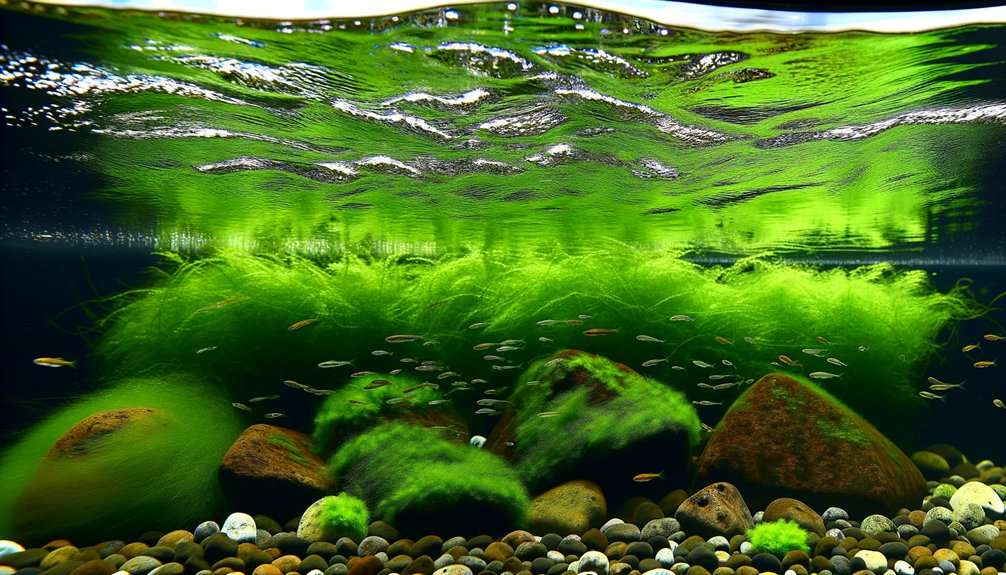
Algae-cycled aquarium uses algae’s natural processes to manage waste and enhance water quality. Algae absorb nutrients, preventing harmful buildup while providing oxygen and stabilizing the ecosystem. By maintaining ideal lighting and nutrient levels, you encourage healthy algae growth, which supports a balanced habitat for fish and plants. This approach leads to reduced reliance on chemical treatments. To optimize your algae cycle and tackle common issues, there are more effective strategies you can implement.
Key Takeaways
- An algae-cycled aquarium utilizes algae for natural filtration, improving water quality by breaking down waste products.
- Beneficial algae absorb excess nitrates and phosphates, preventing harmful blooms and maintaining ecosystem balance.
- Establishing an algae cycle requires suitable algae types, nutrient sources, and controlled lighting for optimal growth.
- Regular monitoring of water parameters ensures a healthy environment for both algae and aquatic life.
- Introducing algae-eating species can help manage algae growth and maintain a balanced aquarium ecosystem.
Understanding the Aquarium Cycle
When you begin the process of setting up an aquarium, understanding the aquarium cycle is vital for maintaining a healthy environment for your aquatic life. The nitrogen cycle plays a significant role in this process. Initially, fish waste and uneaten food produce ammonia, which is toxic to your aquatic inhabitants. Beneficial bacteria, such as Nitrosomonas, convert ammonia into nitrites, another harmful substance. Subsequently, other beneficial bacteria, like Nitrobacter, transform nitrites into nitrates, which are less harmful and can be managed through water changes or consumed by plants. Establishing a balanced aquarium cycle guarantees that these beneficial bacteria thrive, thereby creating a stable ecosystem. By grasping this cycle, you’ll foster a safe and vibrant habitat for your fish and plants.
The Role of Algae in Aquatic Ecosystems
Although algae often gets a bad reputation for causing unsightly blooms, its presence in aquatic ecosystems is essential for maintaining balance and health. Algae diversity plays a vital role in supporting various life forms and enhancing ecosystem resilience. These organisms are primary producers, converting sunlight into energy through photosynthesis and forming the foundation of the food web. They participate in nutrient cycling, absorbing nutrients like nitrogen and phosphorus, which prevents excess nutrient runoff that can lead to harmful blooms. By stabilizing sediments and providing habitats for aquatic life, algae contribute greatly to ecosystem stability. Understanding and promoting algae diversity can foster healthier aquatic environments, ultimately benefiting all organisms relying on these ecosystems for sustenance.
Algae-Cycled Aquarium The Benefits
Creating an algae-cycled aquarium offers numerous advantages that enhance both the aesthetic appeal and ecological balance of your aquatic environment. One significant benefit is natural filtration; algae efficiently break down waste products, improving water quality. This process reduces the need for chemical treatments, making your aquarium healthier for fish and plants alike. Additionally, algae excel in nutrient absorption, utilizing excess nitrates and phosphates that could otherwise lead to harmful algal blooms. By harnessing these processes, you create a self-sustaining ecosystem that requires less maintenance and fosters biodiversity. An algae-cycled aquarium not only looks vibrant but also supports a thriving community of organisms, promoting a holistic approach to aquatic care. Your commitment to this method ultimately contributes to a healthier environment.
Steps to Establish an Algae Cycle
Establishing an algae cycle in your aquarium involves a series of essential steps that promote healthy growth and balance. Follow these steps to create a thriving environment:
- Choose Suitable Algae Types****: Select algae types that match your aquarium’s conditions, like green or brown algae, which thrive in various light and nutrient levels.
- Introduce Nutrient Sources****: Add nutrient sources, such as fish waste, plant decay, or specific fertilizers, to encourage algae growth and guarantee they have the elements needed to flourish.
- Control Lighting: Confirm your aquarium receives adequate light for 10-12 hours daily, as this activates photosynthesis, boosting algae development and achieving a balanced ecosystem.
Monitoring Water Parameters
Monitoring water parameters is vital for maintaining a healthy algae cycle in your aquarium. Regularly checking water quality guarantees that conditions remain ideal for algae growth, which is essential for the ecosystem you’ve established. Test for ammonia, nitrite, nitrate, pH, and phosphate levels. Ammonia and nitrites should remain at zero, while nitrates should be kept low to facilitate beneficial algae development. pH levels between 6.5 and 7.5 are perfect for most freshwater algae. Additionally, monitor temperature and water hardness, as these factors can influence algae proliferation. By staying proactive with your testing, you can quickly address any imbalances, promoting a thriving environment that benefits both your algae and the overall health of your aquarium.
Maintaining Balance in Your Tank
While guaranteeing water parameters are ideal, maintaining balance in your tank is equally essential for the health of your algae and overall ecosystem. Achieving this balance requires a focused approach to guarantee tank stability and promote ideal algae growth. Here are three key strategies to take into account:
- Nutrient Control: Balance nitrogen and phosphorus levels to prevent algae blooms that can disrupt your tank’s harmony.
- Lighting Management: Adjust light duration and intensity to support healthy algae growth while minimizing excess that could lead to instability.
- Regular Maintenance: Perform routine cleaning and water changes to keep your ecosystem healthy, avoiding the buildup of harmful substances.
Troubleshooting Common Issues
Even with balanced water parameters and a well-maintained tank, problems can still arise. One common issue is algae overgrowth, which often stems from a nutrient imbalance. To tackle this, first, assess your lighting duration and intensity; excessive light can fuel algae growth. Next, check your nutrient levels—particularly nitrates and phosphates. If they’re too high, consider reducing feeding frequency or adding live plants to compete with algae for nutrients. Regular water changes can also help maintain balance. If algae persists, introducing algae-eating species may provide a natural solution. By addressing these factors, you can restore harmony to your aquarium and guarantee a thriving environment for both your plants and fish.
Frequently Asked Questions
Can I Add Fish Before the Algae Cycle Is Complete?
You shouldn’t add fish before the algae cycle’s complete. Doing so can cause fish stress due to inadequate water conditions. Consider using cycling methods like fishless cycling to guarantee a healthier environment for your future aquatic life.
How Long Does an Algae Cycle Typically Take?
An algae cycle typically takes four to six weeks, depending on conditions. During this cycling duration, you’ll observe significant algae growth, which helps establish a balanced ecosystem, preparing your aquarium for future inhabitants.
Will Algae Harm My Fish or Plants?
Algae can’t harm your fish or plants; it’s like a superhero in your aquarium! With its benefits, algae aids in maintaining water quality and enhances fish compatibility, creating a thriving ecosystem for everyone involved.
Can I Use Artificial Lighting to Promote Algae Growth?
Yes, you can use artificial light to promote algae growth. Different algae types thrive under specific light conditions, so adjust the intensity and duration accordingly to optimize growth and support your aquarium’s ecosystem effectively.
What Types of Algae Are Best for Cycling My Aquarium?
When cycling your aquarium, you’ll find that green algae and brown algae both serve distinct purposes. Green algae boost oxygen levels, while brown algae break down organic matter, aiding in a balanced ecosystem.
Conclusion
To summarize, establishing an algae-cycled aquarium can greatly enhance your aquatic environment. Studies show that aquariums with well-managed algae can reduce ammonia levels by up to 75% within the first month, creating a healthier habitat for your fish. By understanding the cycle and actively monitoring your water parameters, you can maintain a thriving ecosystem. So, embrace the green and watch your aquarium flourish with life while enjoying the benefits of a balanced tank.
Leave a Reply